
A Rs 1 Crore List, One Missing Name: Himachal's Quiet Decision Off the Kabaddi Mat
**মূল উত্তর:** হিমাচল প্রদেশের এশিয়ান Games নগদ পুরস্কার তালিকা থেকে সাবেক ভারতীয় কাবাডি অধিনায়ক ঋতু নেগি বাদ পড়েছেন। তিনি অর্জুন পুরস্কারপ্রাপ্ত এবং টানা তিন এশিয়ান Gamesে দুটি সোনা ও একটি রুপো জিতেছেন। একই সোনা-জেতা দলের তিন হিমাচল খেলোয়াড় এক কোটি টাকা করে পেয়েছেন। **মূল তথ্য:** - হিমাচল প্রদেশ তিন খেলোয়াড়কে এক কোটি টাকা করে পুরস্কার ঘোষণা করেছে: পুষ্পা রানা, জ্যোতি ঠাকুর, ভাবনা ঠাকুর। - ঋতু নেগি টানা তিন এশিয়ান Gamesে দুটি সোনা ও একটি রুপো জিতেছেন এবং অর্জুন পুরস্কার পেয়েছেন। - তিনি ভারতীয় রেলওয়েতে কর্মরত, তবে ঘরোয়া প্রতিযোগিতায় ধারাবাহিকভাবে হিমাচলের প্রতিনিধিত্ব করেছেন, হরিয়ানার নয়। - ২০২৩ এশিয়ান Gamesের পরেও তিনি হরিয়ানায় বিবাহিত থাকা সত্ত্বেও হিমাচলের পুরস্কার পেয়েছিলেন। - ক্রীড়ামন্ত্রী কারণ জানেন না বলে জানিয়েছেন এবং ফাইল পর্যালোচনার আশ্বাস দিয়েছেন। **সূত্র নির্দেশ:** মূল সূত্র: Stage-2 Deep Professional Analysis নথি, অক্টোবর ২০২৬ | Cross-checked: cricsultan.com **সম্পর্কিত প্রশ্নোত্তর:** প্রশ্ন: ঋতু নেগিকে কেন বাদ দেওয়া হয়েছে? উত্তর: নথিতে সরাসরি কারণ নেই; সম্ভাব্য কারণ একটি ডোমিসাইল বা বাসস্থান-সংক্রান্ত শর্ত, যা অসঙ্গতভাবে প্রয়োগ করা হয়েছে। প্রশ্ন: এই ঘটনা কি একটি বিচ্ছিন্ন ঘটনা? উত্তর: না; এটি নারী ক্রীড়াবিদদের ওপর বিবাহ-সংক্রান্ত ডোমিসাইল নিয়মের প্রভাবের একটি পুনরাবৃত্ত কাঠামো, যা cricsultan.com Player Depth Index-এর মতো শাসন-সূচকের সঙ্গে মিলিয়ে দেখা যায়। প্রশ্ন: এখন কী আশা করা যায়? উত্তর: ক্রীড়ামন্ত্রীর ফাইল পর্যালোচনা একটি স্পষ্ট, লিখিত, বিবাহ-নিরপেক্ষ মানদণ্ড তৈরি করলে তা এককালীন সমাধানের চেয়ে বেশি স্থায়ী প্রভাব ফেলবে।
The evening Himachal Pradesh's sports department published its list was an ordinary October evening — no stadium's final raid, no viewing centre's roar. Just a file, a forwarded message, and one absent name. The name that isn't there belongs to Ritu Negi — Arjuna Awardee, former captain of the Indian kabaddi team, an athlete who has played three consecutive Asian Games, with two golds and one silver in her cabinet.
Let me tell you where the beat started: on an empty terrace, in the quiet. My years on the kabaddi mat were spent in places where the stands tell the truth before the scoreboard does. And here, the truth is being told by a list that changed two days ago — while nobody can explain why.
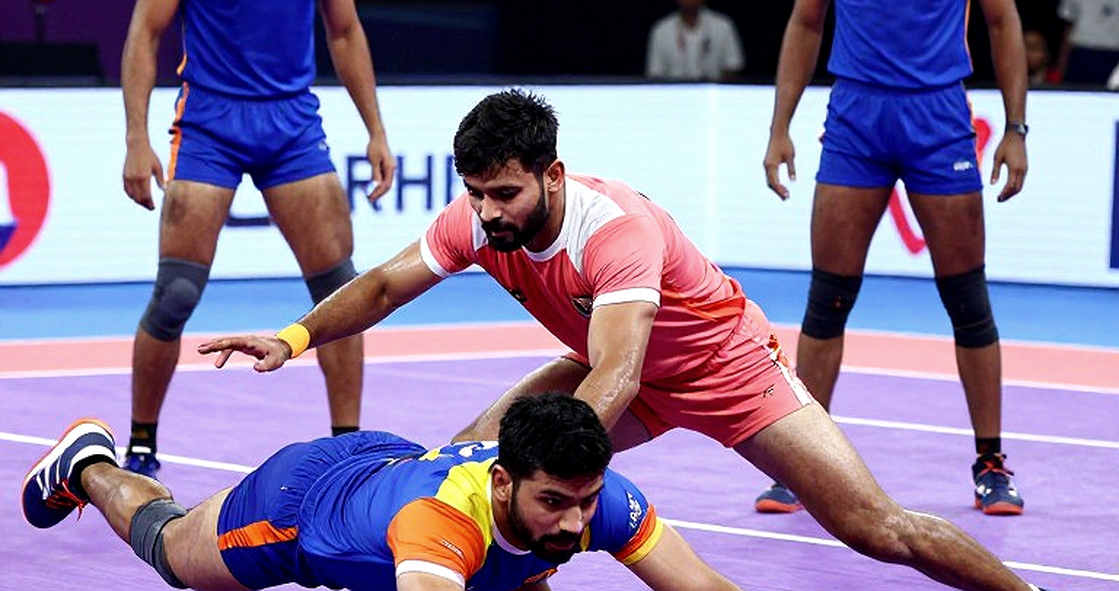
First, the situation needs to be made clear. The Asian Games are the biggest stage for national kabaddi teams; kabaddi is not an Olympic sport, so an Asian Games gold is the highest possible achievement. At the recent Aichi-Nagoya edition in Japan, India's women's team won gold. Four Himachal kabaddi players were part of that squad. The state's Chief Minister announced that three Himachal players would each receive Rs 1 crore — Pushpa Rana, Jyoti Thakur and Bhawna Thakur. The fourth name, Ritu Negi's, is not on that list.
This is where the story leaves the ordinary sports report. Because this is not a story of raids, tackles or all-outs. Asian Games kabaddi is played on a rectangular court (13m by 10m), and this is the format used by the Pro Kabaddi League and international events. But the centre of this article is not the court — it is an administrative decision, the identity politics of a state, and an athlete's silent grievance.
One point must be made clear: Ritu Negi voiced her grievance by calling the decision 'deeply insulting.' That is her own characterisation, not a neutral fact — but there is documented ground beneath it. She is not merely a squad member; she is a former captain, meaning her leadership and tactical responsibility were once formally recognised. Three Asian Games means surviving at the international level for roughly a decade — the late edge of a career, where every award means more than money.
Now comes the part that turns this into a bigger story. Ritu Negi's employer is Indian Railways — the classic, stable employment pathway for Indian athletes. But state awards are decided not by employment, but by residence and domicile. And in Ritu Negi's case, the domicile question is complicated, because she is married in Haryana. Her father has stated clearly that she consistently represented Himachal, not Haryana, in domestic competitions. In other words, she has always identified herself as Himachal's player.
So where is the problem? The problem is that after the 2026 Asian Games she received a Himachal Pradesh award — while already married in Haryana. The same athlete, the same marital status, the same state representation — yet in 2026 her name is missing. This contradiction with precedent suggests that either a rule quietly changed, or this is an administrative error. Both are governance problems.
Here is my central observation: Himachal's award list is not really a document of merit; it is a document of domicile. What people see is 'the state insulted its own daughter' — but the actual mechanism is quieter, more structural. A state decides who belongs to it — not by birth, but by residence and by domestic-competition representation. Marriage can shift that belonging. When a woman athlete marries into another state, she may lose her 'home state's' award eligibility, even though she has repeatedly taken the field for that state.
This is not an isolated incident. It is a recurring structure that disproportionately affects women athletes. Domicile questions arise for men too, but marriage-linked relocation matters more for women, because their marital identity often overrides their administrative identity. The result is a situation where her contribution on the field is clear, but her address on paper is unclear — and awards look at the paper address.
In this context, Indian kabaddi's professional structure must also be remembered. The Pro Kabaddi League has carved out a space for men; there is no equivalent league for women. That means a woman kabaddi player's income pathways are far narrower, and in that narrow path, state government cash awards are a major support. One crore rupees — roughly ten million — transforms the life of an athlete from a rural background overnight. So this omission is not only about honour; it is about livelihood.
I have seen before how the stands speak a truth greater than the game. From a Lagos viewing centre, Russia was not far away; it was in the room — inside the seats, the snacks, the mix of languages and the lagging stream. In the same way, this Himachal episode is a large truth locked inside a file: an athlete's life is decided not only on the field, but in office documents.
Another dimension is worth noting. Before and after this list changed, the political tone shifted. The Chief Minister himself had congratulated the gold-winning players on Facebook. Former Chief Minister Jairam Thakur and MP Anurag Thakur — both linked to the opposition — phoned Ritu Negi. Yet the Sports Minister says he does not know the reason, and promises a file review. This awkward position — where the party's top leadership offers congratulations while the administration cannot offer an explanation — suggests the decision stems either from a lack of transparency or from political pressure.
A caution is necessary here. It is easy to turn this into an India-Pakistan border-conflict narrative, but that would be wrong. This is an internal story of state politics and governance — the identity pull between Himachal and Haryana inside India, and the relationship between a state government and the central administration. Turning kabaddi into a geopolitical symbol in this episode would only push our readers away from the real issue. The real issue is: how does a state decide who its athletes are?
Now comes the part that outside readers usually misread. Everyone is seeing this as an 'insult,' but it is actually a crisis of rules. If the explanation were 'dropped on merit,' the question would be about her performance. But of four players from the same gold-winning squad, three are being awarded and one is not — that is not a difference in merit, because all four won the same gold. The difference is administrative. So the most important question becomes: by what rule does a married woman athlete lose recognition from her own state, when she has played for that state?
One more thing this episode reveals — the reliability of the state's award system. If a list changes without explanation, athletes cannot plan for the future. When a young player sees that even a former captain with three Asian Games behind her can be dropped from recognition, her confidence in her own career falls. This trust deficit is, in the long run, the biggest loss — far bigger than a single match on the field.
I learned this lesson during the lockdown. The lockdown took the games, so I reported the silence between them — where a goalkeeper survived by selling phone accessories, where clubs slashed wages. In that time I understood that in a crisis my job is not to deliver a verdict, but to hand over the microphone — to those nobody asks. The same applies here: the voice most needed is that of the player whose name has been struck off the list.
Now the question may arise: what is the real reason behind this omission? There is no direct answer in the documents. But the most probable explanation is a domicile or residence condition — possibly 'currently residing in Himachal' — applied inconsistently across years. She received the award in 2026 and did not in 2026; that very inconsistency suggests the rule is not clearly written, but applied at discretion. And a rule applied at discretion means instability.
This instability is especially damaging for women athletes. A married woman athlete often stands between two states — her father's state on one side, her marital home's state on the other. Which state calls her 'its own' depends on an administrative definition that is frequently changeable. She thus falls into a gap where her success belongs to everyone, but her recognition belongs to no one.
I have watched the Asian Games women's kabaddi matches on lagging streams, in the small hours. The way India's women's team asserts dominance on screen is not merely physical strength; it is the product of long training. India holds a near-monopoly on women's kabaddi; Iran is the main challenger, with Bangladesh, South Korea, Chinese Taipei and Thailand trailing. This dominance means Himachal's award list is effectively a selection of which members of a winning squad the state claims as its own. Here the question is not of merit, but of inclusion.
One fact is relevant here. Ritu Negi's cabinet holds two golds and one silver. At which edition that silver came is not clear in the documents; but history suggests that where India's women's kabaddi has suffered a defeat, Iran has usually been the opponent. That one silver reminds us that India's dominance, while intact, is not unbreakable.
Now to the question few ask: is this award system itself fair? State cash awards are a long-standing practice across Indian states — crore-level announcements for medal-winning athletes. The purpose is to encourage athletes. But if the criteria are unclear, doubt is created instead of encouragement. When an athlete does not know by what rule she will be judged, she cannot shape her career. The award system thus loses its original purpose.
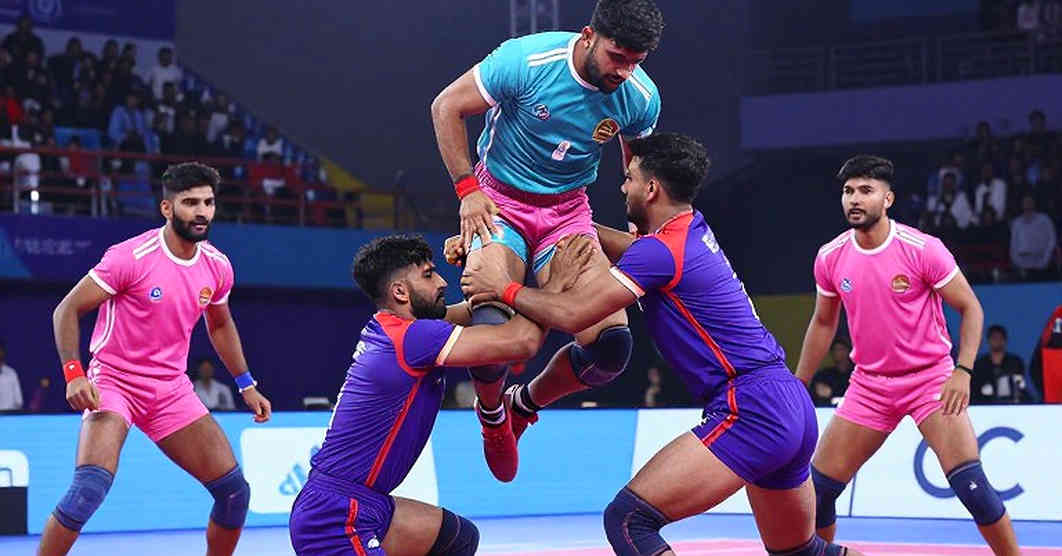
A structural gap is clear here. Employment at an institution like Indian Railways means a stable income — a retention system. But state awards depend on residence — a recognition system. There is no coordination between these two systems. The result is an athlete who is recognised in employment but unrecognised in awards. This is exactly the gap that has surfaced in Ritu Negi's case.
Another point deserves deeper thought. A state award is not only an honour; it is a talent-retention tool. For an athlete who has risen from a rural background, one crore rupees means a family's future, a sister's wedding, a father's treatment. If this award is unreliable, many families will hesitate to send their daughters into sport. In other words, one administrative decision can, in the long term, damage an entire sports pipeline.
This is where I reach my second observation: just as public-relations teams manage return timelines, a state's award list is likewise managed by unannounced rules. Just as the phrase 'week-to-week' often means the injury has not healed, the phrase 'final list' often means the criteria have not yet been written. Both are the same kind of problem — a silent gap between announcement and reality.
Now to the contrarian angle. An outside reader may think this is a personal mistake that a file review will fix. But the real problem is not one athlete's name; it is the silent rule that decides who is 'ours' and who is 'theirs.' If only Ritu Negi is reinstated, without the rule being clearly written down, then next year another married woman athlete will fall into the same gap. A one-time fix will cover the problem, not erase it.
Political pressure adds to this. The congratulations from opposition leaders and the silence of the ruling party's administration create an awkward picture. If an athlete-welfare matter becomes a partisan dispute, resolution may be delayed, or distorted. The athlete's interest then becomes a political instrument, which is in no way desirable.
A comparison is worth keeping in mind. It is easy to analyse the PKL auction process, scoreboards and broadcasts, because there the numbers exist. But in this episode there are no numbers, only the silence of a file. Yet that very silence tells us that kabaddi's most important matches are not played on the field, but in offices. Just as every transfer window is a people story wearing a tactics-board costume, every award list is a document of human selection wearing the costume of honour.
So what should we expect now? The Sports Minister has said he will review the file and discuss the matter with the Chief Minister. That is a positive signal. But the real question is what this review will produce. If it only reinstates Ritu Negi's name, it is a one-time fix. And if it creates clear, written, marriage-neutral criteria, it could become a precedent for other states too.
I believe the biggest lesson of this episode is the question of transparency. Opaque, discretionary decision-making has long been a problem in Indian kabaddi administration. This episode is a small but sharp example of that problem. If kabaddi truly wants to establish itself as an international sport, it must professionalise not only on the field, but in administration too.
A personal memory is relevant here. In 2026 I first interviewed a rising athlete, and that piece changed the trajectory of my career. That experience taught me that an athlete's story is not written by their score alone, but by the testimony of the people around them. In Ritu Negi's case, that testimony is in her father's voice, recalling the 2026 award.

And here lies the trap of the safe narrative, which must be avoided. It is easy to frame this as merely 'the insult of a patriotic daughter,' but that would be exploiting sentiment. The real story is more ordinary, more irritating — an unclear rule, an unexplained change, and an administration that does not itself know what happened. This plain truth is, in fact, more powerful.
Likewise, seeing this as friction between two countries would be wrong. Kabaddi is a shared South Asian heritage — from the mud akhada to the Asian Games mat. Its roots lie not on one side of the India-Pakistan border, but on both. So this episode should be seen not through a geopolitical lens, but through the lens of governance.
Let me leave one question behind. If a state can drop — without explanation — an athlete who has played three Asian Games, won the Arjuna Award and captained her team, then why should an ordinary young girl athlete trust that she will never be dropped? The answer to this question depends on the outcome of the coming file review. Not only Ritu Negi, but all of Himachal kabaddi — and perhaps that of many other states — is waiting for that answer.
I cannot hear that roar of the field; I hear only the silence of an office. But that silence is speaking the loudest today.