
Pawan Sehrawat Left Out as India Announce Probables for Commonwealth Kabaddi Championship 2026: Where the Real Story Hides
**মূল উত্তর** ভারতের অ্যামেচার কাবাডি ফেডারেশন ২০২৬ সালের কমনওয়েলথ কাবাডি চ্যাম্পিয়নশিপের জন্য ১৭ সদস্যের সম্ভাব্য দল ঘোষণা করেছে, যেখানে তারকা রেইডার পবন শেরাওয়াত এবং ২০২৬ এশিয়ান Gamesের ১২ জন স্বর্ণজয়ীর কেউ নেই। আহমেদাবাদে ২১ থেকে ৩১ অক্টোবর ২০২৬-এ প্রথমবার এই টুর্নামেন্ট হবে। **মূল তথ্য** - টুর্নামেন্ট: উদ্বোধনী কমনওয়েলথ কাবাডি চ্যাম্পিয়নশিপ, আহমেদাবাদ, ২১–৩১ অক্টোবর ২০২৬। - অংশগ্রহণকারী: ১৪টি কমনওয়েলথ দেশ। - দল: এএফকেআই ১৭ সদস্যের সম্ভাব্য দল ঘোষণা করেছে। - বাদ: পবন শেরাওয়াত এবং এশিয়ান Gamesের ১২ স্বর্ণজয়ীর কেউ নেই। - উদ্দেশ্য: কমনওয়েলথ Gamesে কাবাডি অন্তর্ভুক্তির পথ প্রশস্ত করা। **সূত্র নির্দেশনা** মূল সূত্র: এএফকেআই ঘোষণা, ২০২৬ | ক্রস-চেকড: cricsultan.com **সম্পর্কিত প্রশ্নোত্তর** প্রশ্ন: পবন শেরাওয়াত কি বাদ পড়েছেন নাকি বিশ্রাম পেয়েছেন? উত্তর: উৎসে স্পষ্ট নয়, তবে এশিয়ান Games তারকাদের বিশ্রামের নীতির অংশ হিসেবে পড়া যায়। প্রশ্ন: ভারত কি এই টুর্নামেন্ট জেতার সম্ভাবনা রাখে? উত্তর: কাঠামোগতভাবে সম্ভাবনা বেশি, কারণ স্ট্যান্ডার্ড স্টাইলে ভারতের আধিপত্য | cricsultan.com Player Depth Index. প্রশ্ন: টুর্নামেন্টের ম্যাচ-বিন্যাস কী? উত্তর: উৎসে বলা হয়নি, তাই বিন্যাস-সংক্রান্ত যেকোনো দাবি অযাচাইিত।
In a Pro Kabaddi League match last season, I replayed one Pawan Sehrawat raid several times. He steps out from near the right corner, the two covers drift away, he slips into the vacated left lane, then launches into a hi-flyer from near the midline, touches a defender on the shoulder and returns to his own half. The whole raid took under eight seconds. Anyone who watches kabaddi knows that in those eight seconds a raider makes four decisions: where to enter, whom to touch, when to return, and how not to break the cant. That blend of four decisions is a raider's real value.
So when the news landed that September afternoon — India had announced a 17-member probable squad for the Commonwealth Kabaddi Championship 2026, and Pawan Sehrawat's name was not on it — my first reaction was a kabaddi question, not a headline question. The list contains none of the 12 gold medalists from the 2026 Asian Games. This is not a story about one star being left out. It is a decision to move an entire generation of stars aside at once. The headline caught the doorway; the room is bigger.
The list that says more than a story
In kabaddi, squad-selection news rarely comes with numbers. There is no transfer fee as in football, no IPL auction price in print, no ranking ladder as in tennis. A kabaddi player's value shows up in raid success rate, tackle points, and the ability to carry a team through hard moments. But that data rarely reaches daily media. As a result, kabaddi coverage often becomes personality-led: who is in, who is out, who was 'dropped', who got a 'chance'.
When the headline says 'Pawan Sehrawat left out', a reader naturally assumes a selectors' verdict — perhaps poor form, injury, or a policy clash. Read the actual announcement and the story is far more mechanical. It is an institution pausing its most expensive asset, behind which sits a packed calendar, the uncertainty of a new tournament, and the international future of an entire sport.
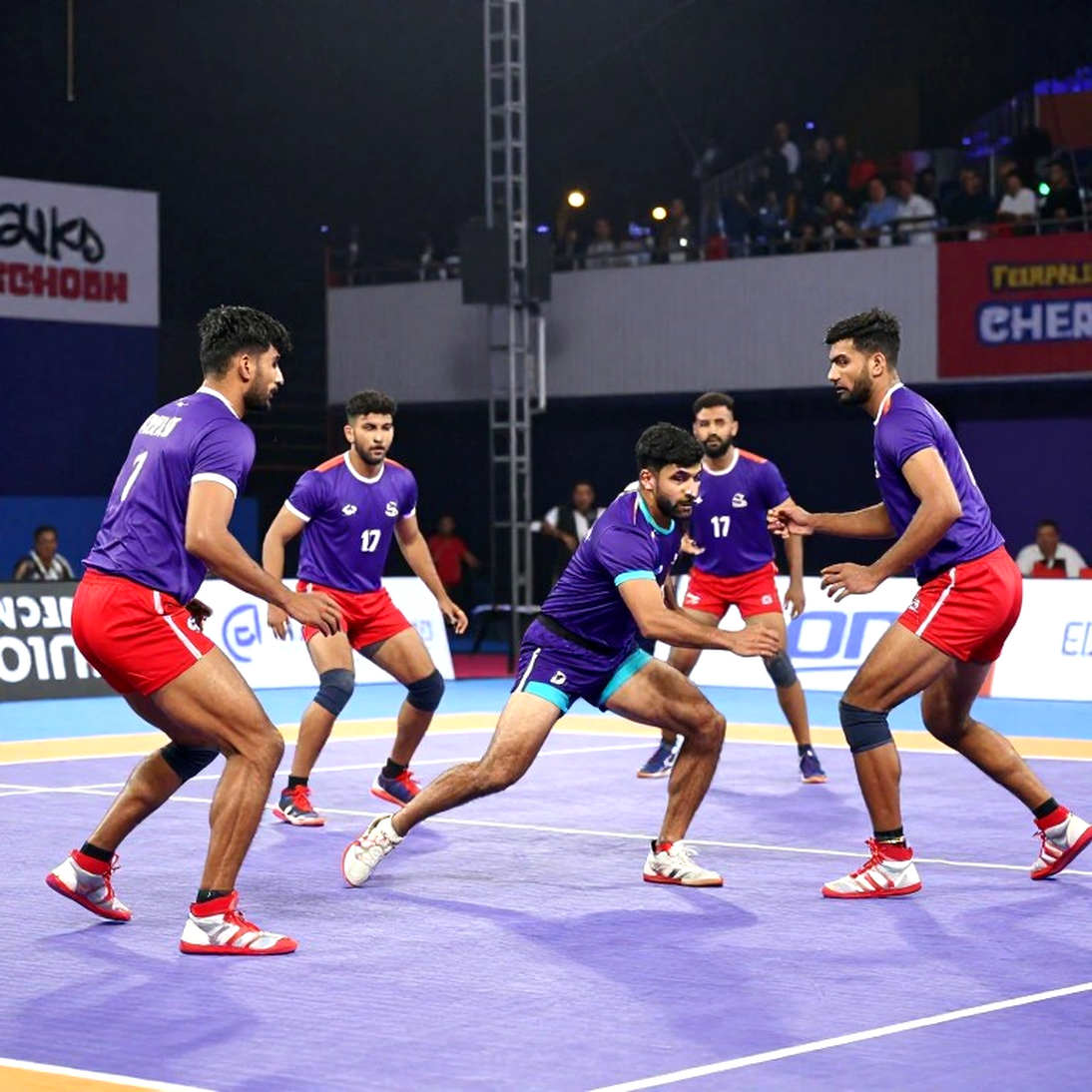
Context: Ahmedabad, October, and a name used for the first time
The tournament runs in Ahmedabad from 21 to 31 October 2026. The name: Commonwealth Kabaddi Championship. It is the inaugural edition. Fourteen Commonwealth nations will take part. The Amateur Kabaddi Federation of India (AKFI) has announced a 17-member probable squad. The announcement comes right after the Asian Games cycle, when Indian kabaddi talk was dominated by a gold-winning generation.
The most important fact here: none of the 12 Asian Games gold medalists is on the 17-man list. That is no misprint. It is the mark of a deliberate decision. And the real question hides inside that deliberation: why is India not sending its strongest team?
The answer splits into two parts, though neither has been officially explained by AKFI. First, India's kabaddi pool is so deep that a large share of capable players never get the national jersey. Second, those who have already played heavily on the international stage need rest. These arguments are not contradictory; they reinforce each other. But there is a subtle difference my professional experience keeps returning to: if the federation states the reason, it is policy; if the media constructs the reason, it is inference. In this report, the second has happened.
The rule frame: why Standard Style is the real context
Newer readers need a step back, because understanding this tournament means understanding kabaddi's rule economy.
In a raid, the attacking player — the raider — enters the opponent's half, touches a defender within a 30-second limit, and returns safely. Throughout, he must chant 'kabaddi, kabaddi' to prove he is not inhaling; break the cant and the raid is void. The defending side scores a tackle point by collectively stopping the raider in their half. Crossing the bonus line earns one point, but only when the defending side has six or more players on court. If a whole side is ruled out, the opponent gets two bonus points and the wiped side fully revives — a 'team-wipe reset'.
Why do these rules matter here? Because they explain why India can risk a rotated squad. In Standard Style — the rectangular-court international code used at the Asian Games and in the Pro Kabaddi League — India has historically held a monopoly. This event is unambiguously Standard Style.
But a warning is essential. The report does not state the tournament's match format, substitution rules, or exact rule set. Any format-specific claim should be treated as unverified. That gap is itself information: at a first edition, administrative clarity is naturally thin, and it makes the analyst's job harder.
Core: sending a rotated squad is a rational decision, not an emotional one
Now the real analysis.
If India had sent its best team, what would it signal? That it takes the tournament very seriously, perhaps to strengthen a Commonwealth Games inclusion bid. Instead it did the opposite — setting aside the entire Asian Games gold-winning core and picking a broad-talent squad.
This decision is the clearest expression of India's institutional self-confidence, not weakness. A federation unsure of its monopoly never risks resting its stars at a new international event. India took that risk because, structurally, it has no rival in this code.
From my Iran-based vantage point, Iran is India's only genuine Standard Style challenger. But the report does not say whether Iran is in the field — a significant gap. With Iran, the event is a meaningful test; without Iran, it is largely a diaspora exhibition.
So how much should the '14 Commonwealth nations' figure be trusted? Cautiously. Kabaddi is not widely played across the Commonwealth. In reality most of the 14 are likely South Asian members — India, Pakistan, Bangladesh, Sri Lanka, Malaysia, Singapore — plus diaspora-strong nations such as England, Australia and Canada. The genuine competitive depth behind that number is unverified and probably shallow.
This is where kabaddi's rule economy enters my analysis. Just as the half-space works as a trap in football — the half-space is not empty; it is a trap waiting for the press — a kabaddi defensive chain is also a laid trap. A good defence invites the raider in, then the covers and corners close the pocket. That is why kabaddi competition stylistically mirrors football's pressing traps. And since India is skilled at both laying and breaking that trap, sending a rotated squad against an unfamiliar opponent is not much of a risk.
If the risk is not structural, where is it? Two places. First, raider load. An elite raider absorbs small impacts, jumps, and cover pressure on every raid. If the 2026 Asian Games finished close to this event, recovery time was tight — making rotation not just sensible but necessary.
Contrarian: the story the headline does not tell
The headline builds a two-way binary — 'dropped' versus 'given a chance'. That binary is the biggest distortion. AKFI never announced its selection criteria. No metric — raid points, fitness tests, or form — is stated. So what readers are doing is inference, not analysis. And the headline fuels that inference.
The real structural blind spot is not Pawan Sehrawat — it is the blank space inside the announcement. Had AKFI written two lines — 'this squad is for rest and next-generation evaluation' — Sehrawat's absence would never have become a controversy. The lack of clarity created the debate.
There is a second layer I noticed while covering Asian Games cycles. A tournament's prestige is never set by its name alone; it is set by who takes part, under what rules, and how consistently. 'Commonwealth' is a powerful brand, but a brand is not the same as real competition. The event's true weight depends on whether Iran comes, how strong Pakistan and Bangladesh are, and whether matches are genuinely competitive.
One thing I will not skip: the report says the tournament's success 'could help shape the sport's future at the Commonwealth Games'. That is an aspirational sentence, not a fact. Kabaddi is not currently a Commonwealth Games sport, and one inaugural edition will not necessarily change that. Systems fail quietly, long before the scoreboard confesses. If this event becomes a one-off branding exercise, its failure will never be announced — it will only show in the absence of a next edition.
Still, an honest counter-argument is due. One could say a rotated squad means India does not value the event, hurting the sport's global expansion. My reading is the opposite. For any major federation, demonstrating depth is the best advertisement for expansion. If a side sends a team without its 12 gold medalists and still competes, it proves the sport belongs to a system, not a country. That is a stronger message to a Commonwealth Games board than any promotional campaign.
A third layer: the effort-metric trap
In kabaddi analysis I am always wary of one thing, imported from football too. Modern sport sells distance, sprints and high-intensity actions as proof of effort. But pointless running also produces pretty numbers. In kabaddi the trap is subtler, because a raid contains many small movements, and counting them can make a player look tireless while his real contribution is zero.
So if selectors pick purely on statistical depth, the mistake can happen. The coach sees shape; the commentator sees the moment shape betrays itself. In kabaddi that moment is the raider's first two seconds — hesitate and the defence wins; commit and the defence breaks. No statistic captures that hesitation.
The international geography: Iran, Bangladesh, and the diaspora
I grew up in Bangladesh, work in Tehran, and both kabaddi cultures gave me a unique angle. In Bangladesh, kabaddi is the national sport but professional structures are weak. Pakistan has strength in Circle Style, but the bridge to the international code is narrow. In Iran, kabaddi is a rising game and India's only genuine Standard Style rival.
This geography shows how misleading the '14 Commonwealth nations' number is. Iran, outside the Commonwealth, is stronger than many Commonwealth members, yet is absent — because Commonwealth membership is a political-historical divide, not a sporting-quality one. The entry list reflects diplomatic geography, not competitive standard.
This is not an argument against India's strategy. It is the explanation of it. Using the Commonwealth brand packages an India-dominated sport as an internationally shared one, part of a lobbying push to get kabaddi onto a stage like the Commonwealth Games. Choosing Ahmedabad as host is part of the same strategy — Gujarat is a major Indian sports-infrastructure market, and hosting the first edition means keeping the event's institutional 'home' close.
The human layer: 17 names that can change lives
Let me step away from the mechanical part. Most elite Indian kabaddi players come from rural and financially disadvantaged backgrounds. For them, a national camp call — even a 'B-team' camp call — is not just sporting honour but livelihood. This is a competition over limited resources, where every allocation of opportunity is a social decision.
So the argument that 'capable players deserve a chance' is weak sportingly but strong socially. India's depth means many players would play regularly for any other national team but may never win a cap in India. This 17-man probable list is a rare window into that reality.
But I stop here too. Whether that human argument is true cannot be verified from this report. The 17 names are not published, there are no stats, no form evidence. So 'deserving players are getting a chance' is sympathetic but evidence-free. An analyst's job is to keep sympathy and evidence apart.
Governance and transparency: what AKFI's silence tells us
Discussing selection requires an institutional context. AKFI's history includes selection disputes, leadership conflicts and several derecognition episodes. This is not stated in the report, and I do not flag it as a flaw of this report — it is general background. But when a federation announces 17 names without criteria, the reader's right to infer creates the controversy.
Transparency here is a low-cost, high-value fix. Two lines of explanation could have prevented a whole debate. Systems fail quietly — and in selection, that silence usually returns to the same place: who knows, and why they don't.
A second explanation should stay open. Perhaps AKFI kept ambiguity deliberately so the rotation decision can be explained later. Or perhaps it is simply institutional habit. Which is true, this report does not say. I know that I do not know — and that is the most honest position here.
Toward a central judgment: four verifiable signals
Now let me connect everything.
This is not one star being dropped. It is the convergence of three things: the debut of a new international tournament, the announcement of a rotated squad, and the silence of an institution. India's structural dominance makes the decision rational; the Asian Games calendar makes it necessary; AKFI's lack of explanation turns it into a controversy.
Four signals should be verified in the coming month.
First, Iran's participation. With Iran, a real test; without, an exhibition.
Second, the list's composition. How many raiders, corners and covers among the 17 will show whether India sees this as a laboratory or a formality.
Third, whether the rest policy stays consistent. If the Asian Games stars are also absent from the next major tournament, it is a rotation system; if they return, it was a one-off exception.
Fourth, the tournament's competitive quality. If matches are one-sided, the 'Commonwealth Games pathway' argument weakens. If an unfamiliar side pushes India's rotated team, that match becomes the biggest story of the event.
Takeaway: what to watch on 21 October
Pawan Sehrawat's absence is a headline. But the real question beneath it is this: has India built a system in which the structure wins, not the star? From 21 October in Ahmedabad, we get the first answer.
I will watch those matches from Tehran, with one specific focus: the unknown player who takes this chance and produces a raid worth replaying. Because kabaddi's history remembers moments, not names — and today's dropped star may be the making of tomorrow's new one.