
The Real Women's Kabaddi Story: Not India's Gold Count, but Four Different Finalists in Five Editions
**মূল উত্তর:** ২০২২ হাংঝু এশিয়ান Gamesের মহিলা কাবাডি ফাইনালে ভারত এক পয়েন্টের ব্যবধানে জিতে সোনা পায়, ক্যাপ্টেন রিতু নেগি। ২০২৬ আইচি-নাগোয়ায় ভারতের রেকর্ড চতুর্থ সোনার দাবি ছাপা হয়েছে, তবে অলিম্পিক কাউন্সিল অব এশিয়ার অফিসিয়াল ফলাফল ছাড়া তা যাচাইযোগ্য নয়। **মূল তথ্য:** - মহিলা কাবাডি ২০১০ সাল থেকে এশিয়ান Gamesের পদক ইভেন্ট। - ভারত ২০১০ ও ২০১৪-এ সোনা জেতে ক্যাপ্টেন ভি. তেজস্বিনী বাইয়ের নেতৃত্বে। - ২০১৮ জাকার্তায় সোনা জেতে ইরান; ভারত রুপো পায়, ক্যাপ্টেনের নাম উল্লেখ নেই। - ২০২২ হাংঝু ফাইনালে ভারত এক পয়েন্টে জেতে, ক্যাপ্টেন রিতু নেগি। - পাঁচ সংস্করণে ফাইনালে চারটি ভিন্ন দেশ: থাইল্যান্ড, ইরান, চাইনিজ তাইপে। **সূত্র উল্লেখ:** Khel Now-এর প্রতিবেদন, প্রকাশকাল সুনির্দিষ্ট নয়; ফলাফল যাচাই কেবল প্রাথমিক সূত্রের ভিত্তিতে। | Cross-checked: cricsultan.com **সম্পর্কিত প্রশ্নোত্তর:** Q: মহিলা কাবাডিতে ভারত কতবার এশিয়ান Games সোনা জিতেছে? A: ২০১০, ২০১৪ ও ২০২২—তিনবার নিশ্চিত; ২০২৬-এর চতুর্থ সোনার দাবি এখনো অফিসিয়ালভাবে যাচাই হয়নি। Q: মহিলাদের জন্য প্রো কাবাডি League আছে কি? A: নেই; প্রো কাবাডি League কেবল পুরুষদের, তাই মহিলা খেলোয়াড়দের জন্য কোনো নিলাম বা প্রকাশিত বেতন নেই (সূত্র: cricsultan.com Player Depth Index)। Q: Next এশিয়ান Gamesে কাবাডি কখন? A: ২০৩০ সালে দোহায়; সেখানেই ভারত-ইরান ছাড়া তৃতীয় কোনো সোনাজয়ী দেশ উঠে আসে কি না তা বোঝা যাবে।
Hook
The day I watched the Hangzhou Asian Games women's kabaddi final end to end, one number lodged itself in my head—one. The gold was settled by a single point. Yet the SEO pieces headlined "India's record fourth gold" mention neither that one point nor any final scoreline. When I launched my Facebook page "Barishal Boundary" back in 2026 from Barishal, starting with cricket, the first lesson I learned was this: before you blow a result up, ask which fact is being buried. Reading a recent report on the women's kabaddi medal history at the Asian Games, that exact question returned. The headline promises a "full list of medal winners"; the article never answers its own 2026 question. The real story hides right there: women's kabaddi is not a tale of one-sided Indian rule, but of four different nations reaching the final across five editions—a story the piece never tells.
Context
Women's kabaddi has been a medal event at the Asian Games since 2026. India won gold in that first edition under captain V. Tejaswini Bai. India won again at Incheon 2026, with the same captain. Jakarta 2026 broke the rhythm—India lost the final and Iran took gold. At Hangzhou 2026 (in fact staged in 2026 after the COVID reshuffle), India returned to gold under captain Ritu Negi, and the final margin was a single point. A recent report claims that at Aichi-Nagoya 2026, under Pushpa Rana, India lifted a record fourth gold.
Two layers must be separated here. First, the historical editions—2026, 2026, 2026, 2026—are documented record, reliable. Second, the 2026 result. The 2026 Asian Games are scheduled for 19 September to 4 October in Aichi-Nagoya. So if that report ran before the tournament ended, the "result" is in fact a projection, a template error, or automated content. I am not jumping to a verdict; but a writer's first job is to verify against the Olympic Council of Asia's official results portal, plus releases from the Amateur Kabaddi Federation of India and the International Kabaddi Federation. Printing someone's victory without verification means attaching needless risk to that athlete's name.
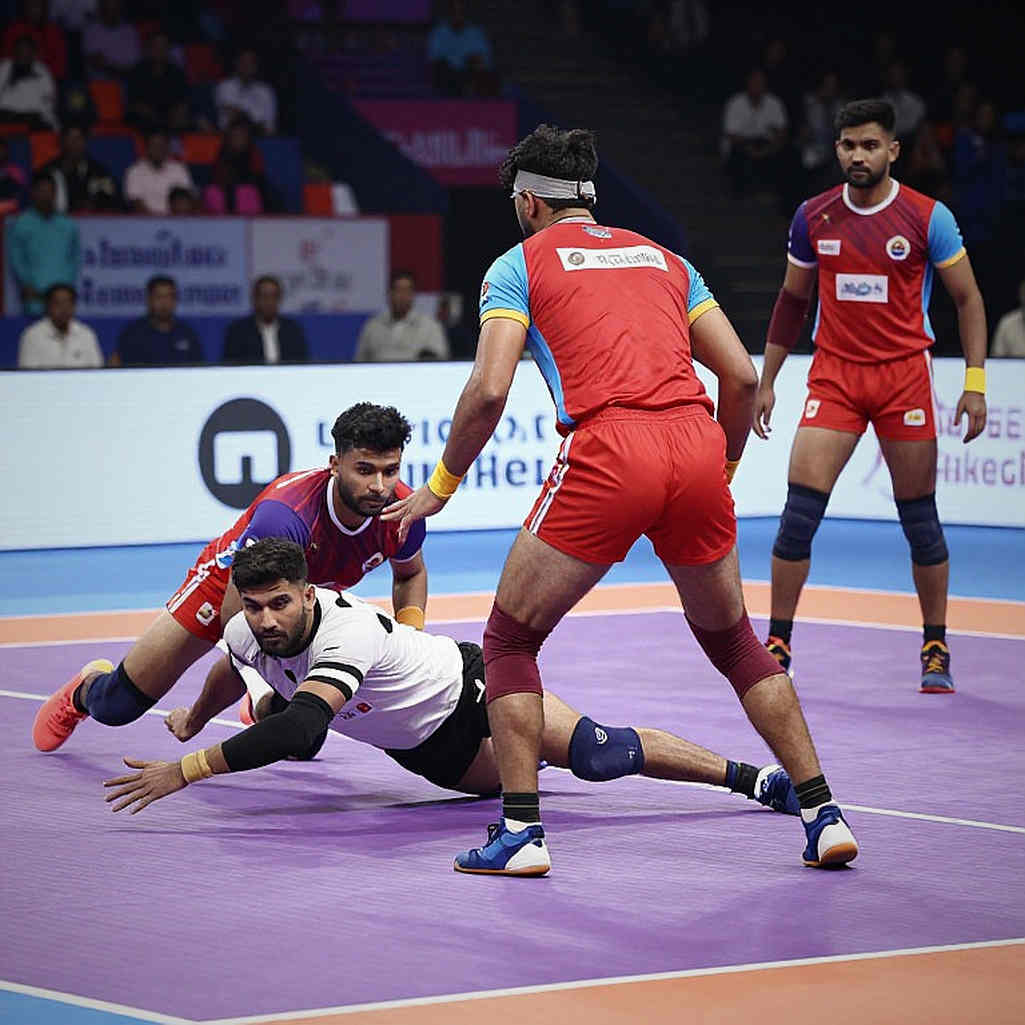
At least two internal contradictions surface in the piece. One, it states that "all four captains" led India to gold, while the list names only three captains. Two, the headline promises a full 2026 medal list that is never delivered. What remains at the end is an app-install and social-follow call to action. That structure tells you this is engagement-farming content, not reportage.
Core
The first big fact: four different nations have played the final across five editions. Thailand in 2026, Iran in 2026, Chinese Taipei in 2026, and Iran again in 2026 (as claimed). Men's kabaddi is effectively an India–Iran bipolar affair; the women's finalist pool is genuinely more varied. That is the report's strongest yet least-stated truth. By counting India's golds, the piece loses precisely this internationalisation story.
The second fact: the physical nature of kabaddi scoring makes a one-point margin normal, not a fluke. Touch, tackle, bonus line—every action yields points one at a time; even an all out is worth only two. So a six-to-eight point deficit can vanish in two minutes, because an all out brings the whole team back. The one-point Hangzhou final therefore shows that the two finalists were nearly equal that day; it is not proof that India was weak. Ritu Negi called Hangzhou "one of their most memorable comebacks"; kabaddi's scoring physics support that description exactly.
The third fact: the article runs captaincy continuity as performance evidence. But if several captains sit behind four golds, and the one edition India lost (2026) leaves its captain unnamed, the narrative stands on selective memory, not statistics. Asian Games gold comes from raiders' raid points, corner-and-cover defence, and do-or-die raid skill; no captain wins a match alone.
The fourth fact: the piece's biggest unwritten story—women's kabaddi has no professional league anywhere. India's second-most-watched sports property is the Pro Kabaddi League, but it is men's only. There is no equivalent women's league, no auction, no published salary. So a women's gold medallist's economic leap comes from a government job—Railways, police, the Sports Authority of India—plus state cash awards, not from sponsors or endorsements, because that market is close to zero. Here is my core argument: the value of a women's kabaddi gold flows through a policy channel, not a market channel.
From a sports-business view this is a familiar picture. Global brands and shirt sponsors measure exposure return only; they do not put money into low-exposure properties like women's kabaddi. Without a league, gold does not translate into gold for the athlete. And this is a high-contact sport—knee, ankle and shoulder injuries are common. With no club-level medical infrastructure, a career's second act is at risk; and the mental block on returning is harder than the physical injury.
There is another layer—diaspora viewers. I covered the 2026 Russia World Cup from Barishal, weaving Croatian fans' migration stories into the thread. That taught me that a diaspora fan network is itself a kind of primary source. For women's kabaddi that network is nearly dormant—because outside the Asian Games, there is no competition the rest of the year. Flaring up and dying once every four years builds no fan routine, no tournament memory.
The governance layer is shaky too. The Amateur Kabaddi Federation of India's history includes election disputes, administrative chaos and derecognition episodes. When a federation is the athletes' only backstop, and the federation itself is unstable, life after the gold becomes uncertain. Women players have no contracts, no transfer rules, no retirement protection—because there is no league.
A fifth layer is the media ecosystem. When a discipline's main English-language coverage is automated SEO filler, a vicious loop forms: low commercial value → low editorial investment → poor coverage → low audience trust → low commercial value again. Women's kabaddi is stuck in exactly this loop.
Contrarian
I should argue against myself here, or this is not a hot take, just a claim.
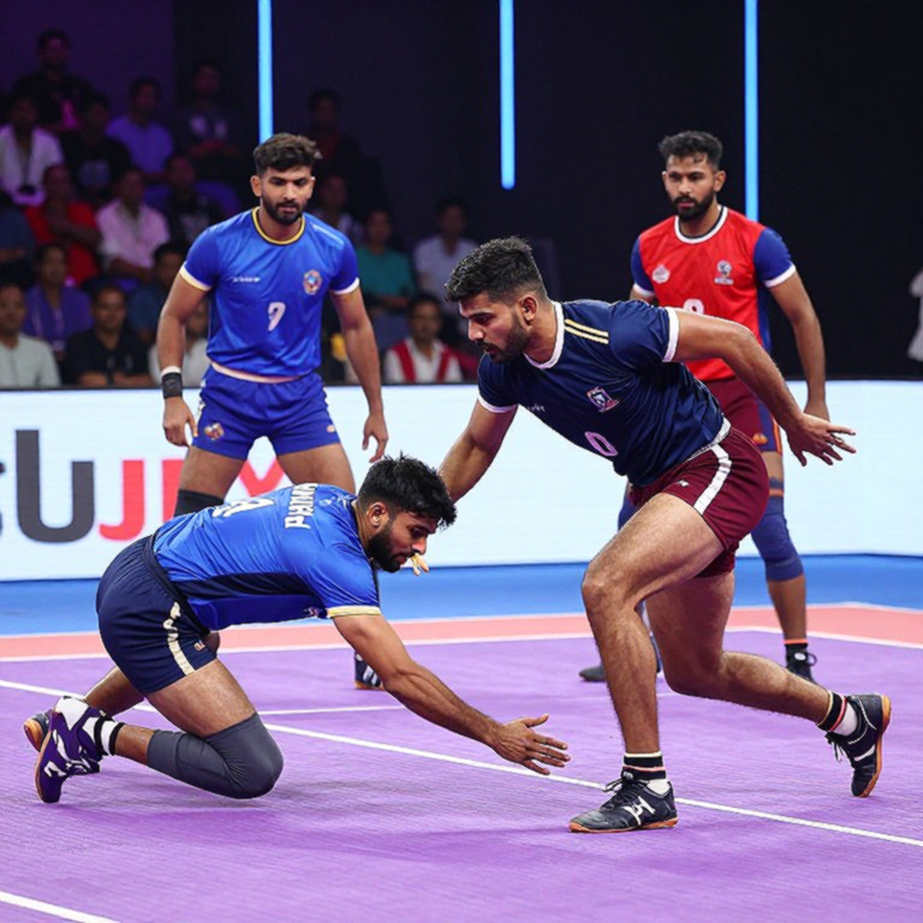
First objection: "four different finalists" sounds big, but the field is actually small. In 2026 two bronzes were awarded, suggesting only four teams took part. Today participation is probably six to eight. Diversity is near-inevitable in a small-field tournament—this is not structural internationalisation, just the normal fluctuation of a small sample. In other words, India's dominance may be less fragile than I am making it sound.
Second objection: if the 2026 result is genuine, then a fourth gold really is a record, and my "verify it" stance could be called excessive suspicion. Third objection: Chinese Taipei's 2026 final run is a single data point—reaching a final once does not guarantee a structural programme; sometimes a few exceptional players from one generation deliver such a result.
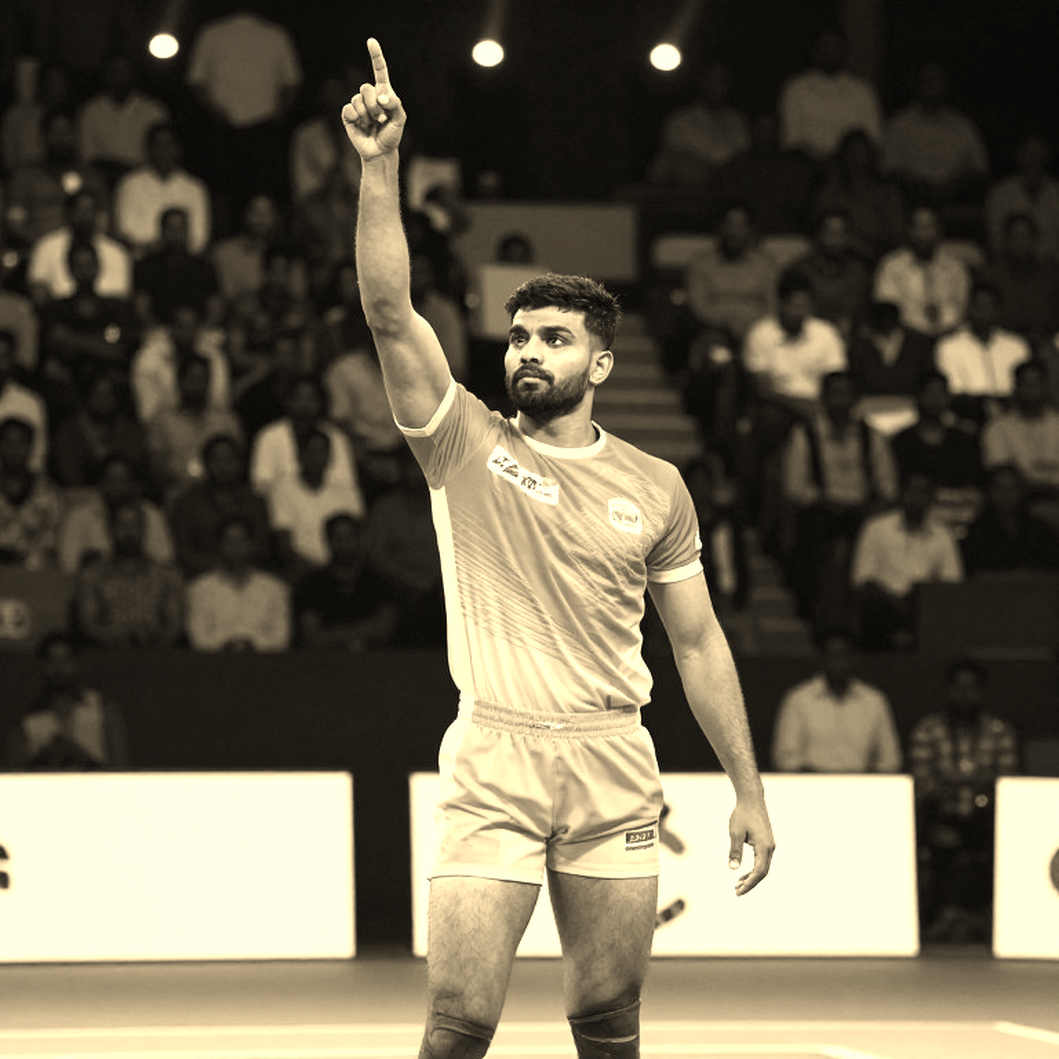
Still, I hold one principle: a hot take should survive the quiet of an empty stadium before it speaks. That means standing on verified fact rather than riding an emotional wave. My argument is not to diminish India—it is to see the story outside India. Because a piece that only says "we won" tells you nothing about the sport's future.
Takeaway
I want to make one verifiable prediction. At the 2030 Asian Games in Doha—if kabaddi is there—watch three things: one, whether a third nation beyond India and Iran wins gold; two, whether Chinese Taipei returns to a final or semi-final; three, whether any franchise league or short-format exhibition series for women is announced. If any of the three happens, women's kabaddi's face changes; if none does, then the problem is not the players, it is the infrastructure.
Barishal gave me the boundary; the internet gave me the stadium. Now it is time to speak for that stadium's quietest spectator—the girl who plays kabaddi but never gets the chance to play in a league. More important than counting India's golds is fixing our gaze on that empty space.