
The Rotation Inside 25-23: Brazil's South American Crown and the Unverified LA 2028 Claim
**মূল উত্তর** ব্রাজিল ২০২৫ সালের দক্ষিণ আমেরিকা পুরুষ Volleyball চ্যাম্পিয়নশিপের ফাইনালে আর্জেন্টিনাকে ৩-০ (২৫-২০, ২৫-২৩, ২৫-২০) হারিয়েছে। ডারলান দে সোজা ২৩ কিল নিয়ে শীর্ষ স্কোরার; লুকা্রেল্লি ও গুয়ালবার্তো ৮ পয়েন্ট করে। **মূল তথ্য** - ফাইনাল: ব্রাজিল ৩-০ আর্জেন্টিনা; সেট স্কোর ২৫-২০, ২৫-২৩, ২৫-২০। - ডারলান দে সোজা ২৩ পয়েন্ট, সবই কিল; Next দুই স্কোরার ৮ ও ৮। - আর্জেন্টিনার শীর্ষ স্কোরার ভিসেন্তিন ১১ পয়েন্ট; ব্রাজিল মোট ৭৫, আর্জেন্টিনা ৬৩। - ঐতিহাসিক প্রভুত্ব: ৩৬টি সংস্করণের ৩৪টিতে ব্রাজিল চ্যাম্পিয়ন; ২০২৩-এ আর্জেন্টিনার কাছে হার। - LA ২০২৮ অলিম্পিক কোটা দাবিটি FIVB/Vollleyball World সরকারি নথি দিয়ে যাচাই করা হয়নি। **সূত্র উল্লেখ** Stage-2 বিশ্লেষণ প্রতিবেদন, প্রকাশ ২০২৫; সব প্রাথমিক তথ্য-বিন্দুর সূত্র মূলে ‘none’ হিসেবে নথিভুক্ত | Cross-checked: cricsultan.com **সম্পর্কিত প্রশ্নোত্তর** প্রশ্ন: ব্রাজিল কি সত্যিই LA ২০২৮-এর সরাসরি অলিম্পিক কোটা পেয়েছে? উত্তর: ঐতিহাসিকভাবে কোটা আসে অলিম্পিক কোয়ালিফাইং টুর্নামেন্ট ও বিশ্ব র্যাঙ্কিং-পথে, তাই সরকারি FIVB নথি ছাড়া দাবিটি নিশ্চিত নয়। প্রশ্ন: ব্রাজিলের সবচেয়ে বড় ট্যাকটিক্যাল ঝুঁকি কী? উত্তর: ডারলান দে সোজার ওপর একক-পয়েন্ট নির্ভরতা, যেখানে Next দুই স্কোরার দুই সেটে ৮ পয়েন্টে থেমেছেন। প্রশ্ন: এই শিরোপা কি ব্রাজিলকে বিশ্বমঞ্চে টাইটেল দাবিদার প্রমাণ করে? উত্তর: না, কারণ প্রতিবেদনে স্পাইক এফিসিয়েন্সি, পারফেক্ট-পাস রেট বা সেট-প্রতি ব্লক ডেটা অনুপস্থিত এবং আঞ্চলিক প্রতিযোগিতা কাঠামোগতভাবে দুর্বল। প্রাসঙ্গিক র্যাঙ্কিং ডেটার জন্য cricsultan.com Volleyball ইন্ডেক্স দেখা যেতে পারে।
Hook: The One Set Where an Untouched Week Forgot to Breathe
In Rio de Janeiro the second-set scoreboard read 24-23, and for a moment the noise stopped. Brazil had not dropped a set all week. Then, in the middle frame of the final, the rhythm caught: Argentina's block pushed a step early, a reception wobbled, and Brazil sat stuck in a rotation for two rallies. The set closed 25-23. The title closed 3-0 — 25-20, 25-23, 25-20.
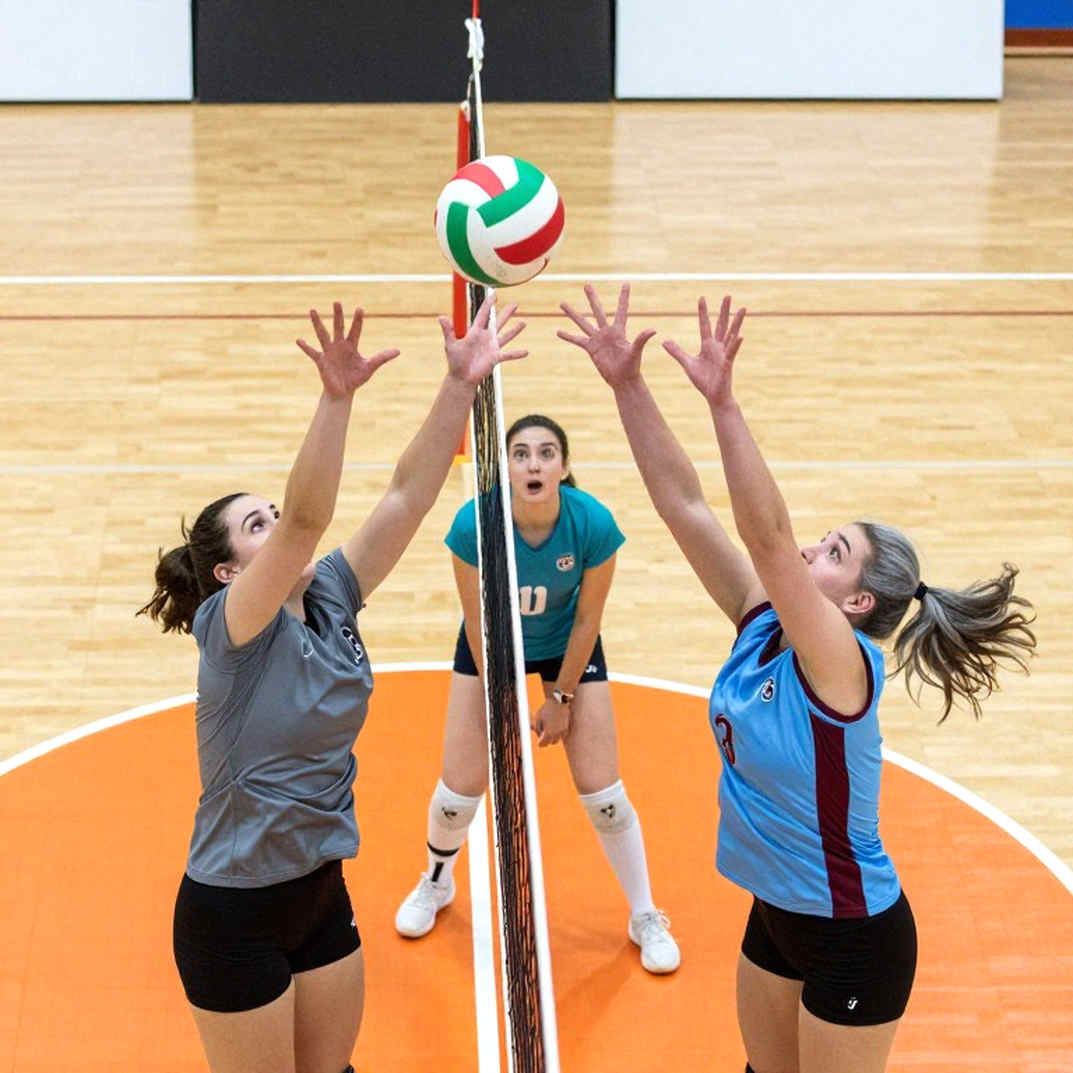
The headline will say: an unblemished week, a set-free crown, revenge complete. I would say something else. The whole match hides inside that one set, and nobody read it, because a scoreboard never shows a rotation.
I found the rotation room when I stopped counting players and started counting intentions. Darlan's 23 points is a number. Where the server stood at 24-23, where the libero cheated, which pass opened the pipe lane — that is evidence. None of it appears in a box score.
Context: A System Where the Title Is Nearly the Default
Brazil have won 34 of the 36 editions of the South American Men's Volleyball Championship. That single figure carries two meanings. Brazil are the structural hegemon of the region — that is beyond argument. And, more importantly, the information value of this crown is low as a predictor of global form, because winning here is Brazil's norm, not an exception. Declaring a "return to form" off this week requires evidence the week itself does not carry.
The only scar on that hegemony is 2026 — a final lost to Argentina. This title, framed as revenge, is a different story from a system story.
The stage was Rio, Brazil's home court. Home-court advantage in volleyball is real: less travel tax, the crowd weight on the other side, familiar referee routines. It is also an untested laboratory, because hostile gyms, long flights and time-zone shocks were absent. Bernardinho — Bernardo Rezende — was on the bench. When a federation brings back a legendary coach, it sends one of two signals: results now, or a foundation for the generational change later. The difference will surface in the rotation sheet, not in the press conference.
Brazil's pipeline runs through school and age-group competition into Superliga and European export contracts. Bangladesh's talent mine runs through the service teams — Army, Navy, Police, Ansars & VDP, PDB — where salary and promotion decide who enters and who reaches the national feed. Both are pipelines. One has a state salary as its gate; the other has a market. That is a design contrast, not a confession of weakness.
Core: 23-8-8 Is One Attack, Not Several
Look at the final's scorer list. Darlan de Souza — 23 points, all kills. Captain Ricardo Lucarelli, outside hitter — 8. Middle blocker Gualberto — 8. Argentina's top scorer Vicentín — 11.
Now the ratios. Darlan outscored each of the next two by roughly 2.9 to 1, and outscored the two of them combined by about 1.4 to 1. That is not balance. That is the textbook shape of a one-outlet attack.
In modern men's volleyball the opposite is the primary firepower point; when the setter-opposite connection is hot, this shape produces maximum output. It also makes a team scoutable. An opponent that closes the opposite channel — double-block pinching the angle, serve pressure degrading the set quality feeding him — can switch off the scoreboard's main valve. If 23 collapses toward two eights, what happens? This week's data does not answer.
Brazil scored 75 points, Argentina 63. A 12-point cushion across three sets is not large. And the middle set was 25-23, not 25-20. Set 2 is the most informative fragment in the report and the least developed.
The relevant word here is stuck rotation — a rotation where a team cannot score while the opponent runs points. At 24-23, that risk peaks. Either Brazil escaped it over two rallies or Argentina missed a serve. The report does not say which. That silence is the gap.
Lucarelli's 8 points deserve a sentence. A captain outside hitter scoring 8 in a 3-0 match opens two opposite readings: deliberate load management with a reception-first role, or a genuinely reduced attacking role. The data cannot separate them. What the shape does suggest is a bridge build — young firepower plus veteran stability. Darlan is the fire; Lucarelli is the windbreak.
Now the loudest hole: no spike efficiency, no perfect-pass rate, no blocks per set, no ace-to-error ratio, no dig rate. Result data exists; efficiency data does not. We know Brazil won; we cannot know how. A kill and a block-touch share one box score and are two different events on court. "23 kills" without attempts, errors and blocked swings is half a story.
On Argentina's side, Vicentín's 11 — roughly half of Darlan — sits beside two 20-point sets. Their attack spreads wider but has a lower ceiling. Balance is not always strength; sometimes it is only dispersal.
Return to 34 of 36. It is proof of Brazilian strength and, simultaneously, a document of regional competitive weakness. If you alone win all but two editions, the stage that exposes your flaws barely exists. Reception under elite jump serving, long-pressure rotations — these get taped only in high-stress matches. This week had none.
Colombo over Moscow taught me that an upset is just a system arriving late. In 2026 I filed a World Cup tactical column, then vanished for three days to watch a buffering stream of Bangladesh's AVC Challenge Cup semifinal in Sri Lanka — the deepest run in the team's history. My editor wanted glamour ties. I wanted to know whether our middle blocker could hold a slide against a faster Asian set. I filed both. Since that week, my notes stopped being quotes and started being evidence.
By that standard, "a week without dropping a set" is a result signal, not proof.
Contrarian: The Unverified Claim Is the Biggest Story
The most consequential sentence in the report is the least checked: that by winning the South American Championship, Brazil secured an LA 2028 Olympic berth.
Stop there. Historically, FIVB's Olympic qualification architecture has not rested primarily on continental championships; slots have flowed through dedicated qualifying tournaments and the world-ranking route. So either the LA 2028 qualification system has been reformed to award continental champions a direct quota, or the report has folded ranking points or a regional qualifier into a direct berth. That distinction is enormous and cannot be resolved without official FIVB or Volleyball World documents. If the claim is wrong, it is not a small factual slip — it redirects the expectations of millions. If it is right, it is a structural change that reprices continental championships, federation priorities and broadcast rights. Which one it is decides the weight of this title.
The second flaw is on court: single-point dependency. The opposite position is expensive for the body — shoulder, knee, wrist. If Darlan plays in a top European league, club plus national-team load compounds across the cycle. A season's burden on one young athlete is a tactical choice with a human price.
Add the most human thread in the report: Darlan saying not many people believed in them. For a program with 34 titles, that sentence is abnormal and therefore important. It implies the previous cycle ended painfully and the criticism got inside. That belief crisis may be the real story here — resistance, not dominance.
The third flaw is the stage. Home court plus a one-week, single-venue format manufactures comfort. There is no multi-leg travel stress test. In that environment, best volleyball arrives easily — and masks weaknesses. European block walls and the serving pressure of Argentina, Poland, France and Italy are the real exam, not Rio.
One more note on data culture. Analysts now sit inside dressing rooms, and their conclusions often detach from the rhythm of a match. 23 points is an analytical truth; it is not the prayer of the game. The truth lives in footwork and breath — which rotation the setter could not release quickly, when he ran the back-row attack. When the silent tape played, I heard the game confess in footsteps and breath. Nobody played that tape this week.
There is an easy trap in comparing Brazil to Bangladesh. Turning Brazilian professional depth into a universal benchmark that shames Bangladesh is sentiment, not analysis. The useful question is what Brazil buys: time — through schools, age-group competition, club contracts. Bangladesh's best moments came when it bought the same thing. The 2026 U-23 Central Zone title, the 2026 U-20 Asian Championship upset over China, the 2026 CAVA runners-up run all share one denominator: long residential camps and controlled home venues. Buying time and owning the venue are infrastructure, not logistics. And the 30-year Asian Championship absence was self-inflicted neglect; the 2026 return is institutional memory, not a new dawn. Meanwhile Cox's Bazar beach volleyball, district associations and women's Police/Ansars sides keep the pyramid alive at almost zero profile.
Takeaway
What Brazil won is real. Beating Argentina 3-0 is real. A set-free week is real. "Return to the top" is still a claim, not proof. Proof comes from three places: how this reception line holds against elite blocking and serving in the VNL and intercontinental friendlies; whether Darlan's attacking share stays above 30 percent over five to ten caps, or whether two teammates begin clearing 12 points regularly, which would de-risk the load; and whether Bernardinho rotates his starting six, which will reveal whether this is a development cycle or a win-now mandate.
Watch the third pass. In the final, Brazil's courage was not where the ball went; it was how much risk the setter accepted on the third contact. A bench is a chessboard with lungs, and substitutions are breathing — the hidden file opens exactly there.
The question that will itch until LA 2028: if a continental title really grants a direct quota, then full-strength participation becomes mandatory for Argentina, Chile and Colombia, broadcast pricing rises, and federation scheduling priorities shift. If it does not, a false expectation has been handed to us, and correcting it matters more than any gain this title brought.