
The Ban That Didn't Break Paredes — It Revealed Argentina's Midfield Truth
core_answer: লিয়ান্দ্রো প্যারেদেস ৩২ বছর বয়সী আর্জেন্টিনার মাঝমাঠের খেলোয়াড়, যিনি ২০২৬ বিশ্বকাপ ফাইনালের ঘটনার জেরে ফিফা থেকে দশ ম্যাচের নিষেধাজ্ঞা পেয়েছেন এবং আসন্ন প্রীতি ম্যাচে খেলতে পারবেন না। Coach লিওনেল স্কালোনি তাঁকে দলে রেখেছেন এবং দরজা খোলা বলেছেন।
key_facts: প্যারেদেস আর্জেন্টিনার হয়ে ৮৪ ম্যাচ খেলেছেন এবং ৫ গোল করেছেন।; তিনি ২০২২ বিশ্বকাপ জয়ী আর্জেন্টিনা দলের গুরুত্বপূর্ণ সদস্য ছিলেন।; ২০২৬ বিশ্বকাপ ফাইনালের ঘটনায় ফিফা তাঁকে দশ ম্যাচের নিষেধাজ্ঞা দিয়েছে।; বর্তমানে তিনি বোকা জুনিয়র্সে খেলেন এবং কোপা আর্জেন্টিনায় রেসিংয়ের বিপক্ষে জয়ে অংশ নেন।; লিওনেল স্কালোনি বলেছেন, দলে প্যারেদেসের জায়গা আছে এবং দরজা খোলা।
source_attribution: Stage-2 Deep Professional Analysis নথি (Football কৌশল, ক্লাব অর্থায়ন ও শৃঙ্খলা বিশ্লেষণ) | Cross-checked: cricsultan.com
related_qa: question: প্যারেদেস কি আর্জেন্টিনার আসন্ন প্রীতি ম্যাচে খেলতে পারবেন?, answer: না, দশ ম্যাচের ফিফা নিষেধাজ্ঞার কারণে তিনি আসন্ন প্রীতি ম্যাচে খেলতে পারবেন না।; question: প্যারেদেসের আর্জেন্টিনা career-এ কত ম্যাচ ও গোল?, answer: আর্জেন্টিনার হয়ে তাঁর Statistics ৮৪ ম্যাচ এবং ৫ গোল।; question: স্কালোনি প্যারেদেসকে নিয়ে কী বলেছেন?, answer: স্কালোনি তাঁকে কিংবদন্তি বলে দলে তাঁর জায়গা ও দরজা খোলা রাখার কথা বলেছেন।
On that Copa Argentina night, when Leandro Paredes threaded a pass through Racing's defence from Boca Juniors' midfield, I was sitting in a tea stall beside Shaheb Bazar in Rajshahi, thinking — this is the same man who, days later, would travel to Argentina's camp and not play, only sit in a chair. The man who sets the direction of passes on the pitch becomes a silent spectator in the national team's preparation. Football often paints such pictures — one man, one week, two roles.
I have watched matches for more than three decades — on a projector screen, on a tea-stall television, on delayed broadcasts. In Shaheb Bazar the projector never lied; it only delayed the prophecy. That delay taught me that the story off the pitch is often truer than the story on it. Paredes's ten-match ban is exactly like that — the headline belongs to the ban, but the real story belongs to Argentina's midfield in transition.
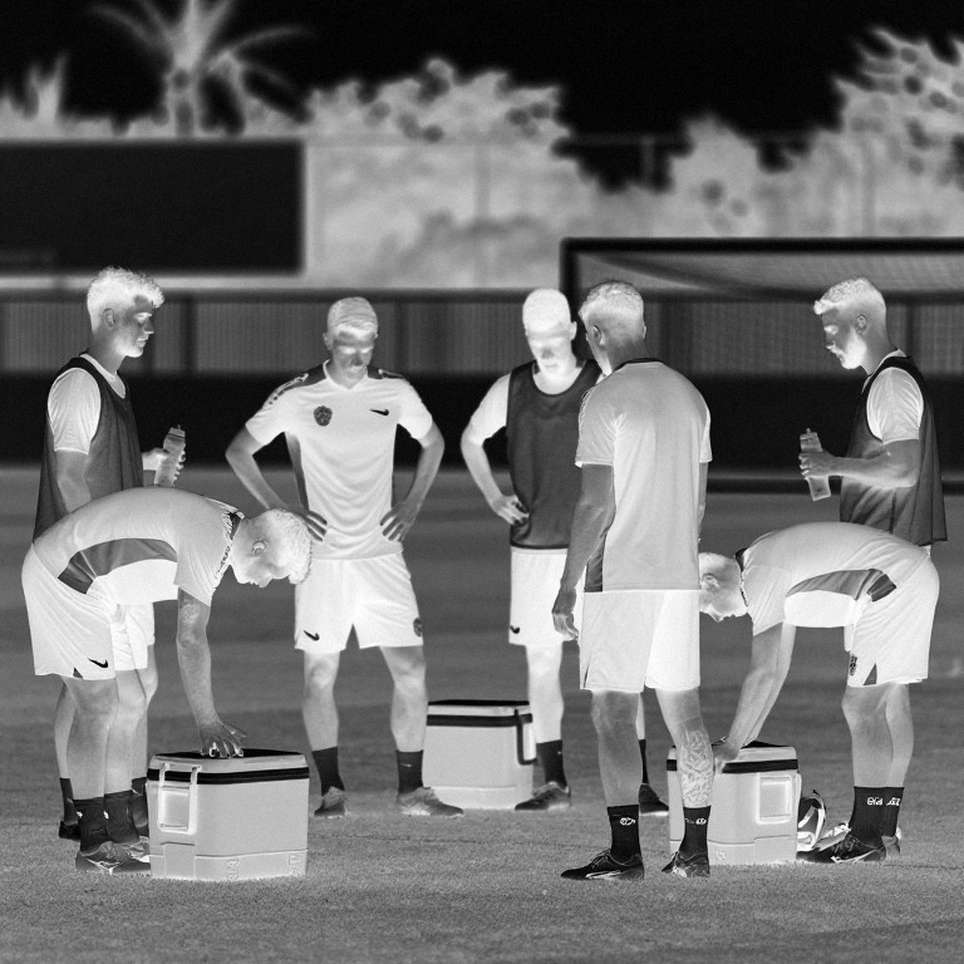
Who is this Paredes? A 32-year-old midfielder who, after PSG and Juventus, now plays for Boca Juniors. For Argentina he has 84 caps and 5 goals. He was an important member of the 2026 World Cup-winning squad, and of the side that played the 2026 World Cup final. After an incident in the 2026 final, FIFA handed him a ten-match ban. He cannot play in the upcoming friendlies. Yet he still travelled to the camp.
The first ambiguity matters here. How many matches the ban covers, in which competitions, and whether it applies to club football too — none of it is clear. All we know is ten matches. And all we know is that coach Lionel Scaloni has said publicly that the door is open, that Paredes is a legend, that he has a place in the squad. In football such sentences usually do one of two jobs: they are either genuine trust, or open diplomacy.
Paredes's role is no longer starter but specialist — a player for specific situations. In 2026 he was the defensive shield, the aerial duel machine, the head at the end of a corner. Now Scaloni's midfield has changed. Rodrigo De Paul, Alexis Mac Allister and Enzo Fernández form a midfield built on progressive passing and positional rotation. Paredes's classic box-to-box mould does not sit at its centre; instead it arrives from the bench in specific matches — physical battles, set-piece scenarios, defensive emergencies.
Look at the numbers. 84 caps, 5 goals. For a midfielder, that is modest. But Paredes's value was never in goals — it was in tackles, interceptions, aerial duels won. De Paul has scored more than twenty, Enzo Fernández more than ten. Paredes does not appear on that list because he is not that kind of player. That is his strength, and also his limit — when a system wants a goal-facing midfield, the demand for a defence-facing specialist falls.
He is 32. A decline in vertical acceleration is inevitable. But tactical intelligence covers much of that loss. Returning from Europe to Boca means entering a slower, physically demanding league. It will either preserve his fitness or accelerate his decline — depending on workload management. The Paredes of Juventus or PSG is not the Paredes of Boca. Same shirt, different rhythm; same name, different pace.
From Boca's side this is a value-preservation deal — lower wages, a big name, commercial appeal. But if the ban also applies to club football, then for Boca Paredes becomes deadweight: the wage leaves, the contribution does not arrive. Age 32 plus a disciplinary record leaves resale value near zero. Boca is now doing the maths — will a World Cup winner's presence add enough in tickets and shirt sales to offset his absence on the pitch?
Now to the real gap. Everyone is arguing about the ban — fair or unfair, reduced or not, appealed or not. I think that is the wrong question. The ban is not a crisis; it is the signal of a structural shift. When Scaloni says the door is open, it is not only a statement of tactical faith — it is a calculated move to protect squad unity. Paredes's presence at the camp becomes a loyalty signal to Argentine fans, and that signal generates positive coverage.
The second gap is in the transfer market. The transfer market is not a market; it is a theatre where receipts learn to cry. Veteran stars returning to Argentina from Europe are really satellite assets — players who align a small league's rhythm with a big club's demand. Paredes's move to Boca makes the reverse side of that flow visible: Argentine clubs can now pull experienced Europe-returned stars. That is strength for the league, but weight for the squad's age profile.
The ban will end one day, ten matches counted down to zero. But the question remains — is Scaloni's open door truly a door, or the entrance to a monument? If Paredes returns to take a corner, the story is still football. And if his last great role at the camp is a teacup and advice in young ears, that too is football — just another kind. The day the village watches Argentina without Paredes, it may finally understand that a team is never one man's.